Research Objectives
Specific questions:
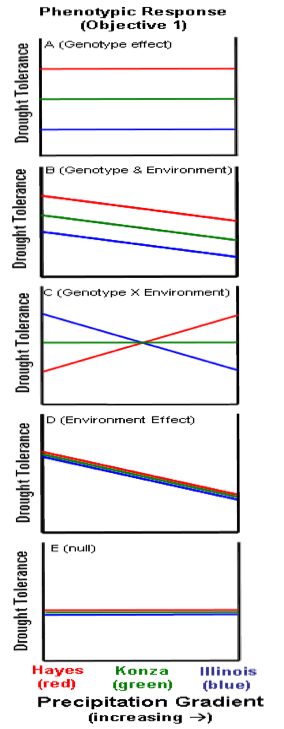
- Are there local ecotypes? Do phenotypes of A. gerardii show local adaptation to drought (natural and experimentally induced)? Is this a plastic or a heritable genetic response?
- What are the levels of genetic diversity among ecotypes across the gradient?
- Do ecotypes (single and mixed) differentially affect how tall grass prairies function and respond to natural and experimentally reduced precipitation?
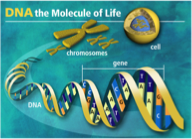
-What is the functional genetic basis for phenotypic differences in drought adaptation among the ecotypes? What are the genes involved?

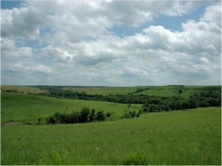
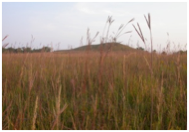
The central grassland of North America is one of the most productive rangelands. Changes in amount of precipitation will likely impose critical environmental stress and may compromise future grassland productivity and sustainability.
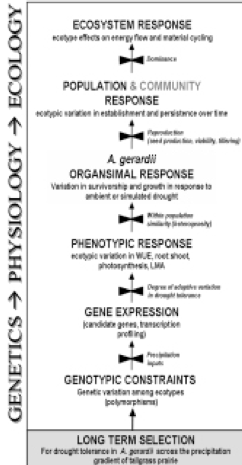
The overall goal of this research to provide an integrative and mechanistic understanding, spanning from genetics to plant physiology to regulation of ecosystem processes, of the response of an ecologically dominant forage grass to natural and simulated changes in precipitation.
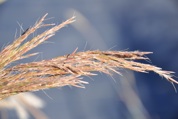
We aim to investigate ecotypic variation in big bluestem Andropogon gerardii under natural and experimentally reduced precipitation across prairie from KS to IL, and to identify the genetic bases of underlying adaptive variation in drought tolerance, which will ultimately be used to predict the functional response to climate change.
Hypotheses
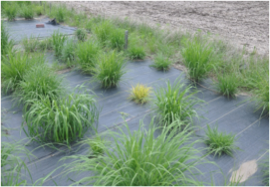
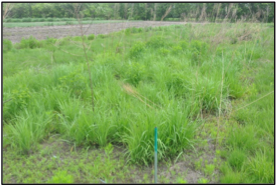
APPROACH: RECIPROCAL GARDENS OF ECOTYPES ASSEMBLED INTO COMMUNITIES (left) AND GROWN AS SINGLE, SPACED PLANTS (right)